
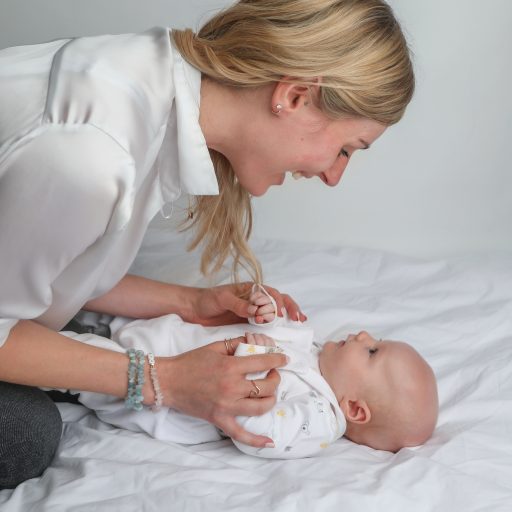
This is a question I get asked all the time — especially when I meet new people and tell them I’m a physio for babies (or a neonatal physiotherapist if I’m being professional!).
Usually the response is something like:
“Oh… so you do baby massage?”
“Why on earth would a baby need physiotherapy?!”
And while yes — babies absolutely do benefit hugely from massage (more on that in another post very soon!) — there are actually lots of reasons a baby might see a physio. So let’s break it down…
First — a quick word about baby massage
Touch is the first sense to develop in the womb, and positive touch (like baby massage) is incredibly powerful for babies.
Research shows baby massage can help with:
• overall development
• pain relief
• sleep
• digestion and gas
• calming and regulation
And just as importantly — when parents massage their babies it supports parental wellbeing, mental health, and builds beautiful bonds and connection. It’s truly amazing ❤️
But… that’s a whole post on its own! So — what else does a baby physio actually do?
What is a neonatal physio?
Neonatal physiotherapists are specialists in baby development — particularly neurodevelopment. In simple terms, neurodevelopment is how the brain grows, connects, and learns to control the body. Things like rolling, sitting, crawling, walking, posture, muscle control, coordination — all come from how the brain develops and sends messages to the body.
Many neonatal physios work on neonatal units (NICU). Some babies are born needing extra support — for example:
• babies born prematurely
• babies born with brain injuries
• babies with certain medical conditions
These babies are considered “high-risk” for developmental difficulties and benefit from support right from the very start.
Why are the first two years so important?
The first two years of life are an incredible period of brain development. If you look at a brain scan of a newborn compared to a two-year-old — the difference is amazing. Millions of neural connections and pathways are forming every single day. This means early support can make a huge difference.
Physios help by:
• supporting positioning and comfort
• helping musculoskeletal development
• guiding movement and motor skills
• teaching parents how to read baby cues
• supporting bonding and developmental care
As babies grow, we regularly assess their development and provide support where needed.
But what about healthy babies at home?
The good news — most healthy babies develop beautifully on their own when they’re in a responsive, loving environment ❤️
There is also a huge range of normal. For example — babies can walk anywhere from around 10 months to 18 months and that’s completely normal! Every baby is different.
However… there are some situations where seeing a physio can be really helpful.
One of the most common reasons: head turning preference
This is something I see all the time — and it can happen in up to half of babies!
Because of everyday life (and us parents often having a side preference — like being right-handed when changing nappies, feeding, carrying, placing baby down), many babies start to prefer looking one way.
If this becomes strong, it can lead to:
• flattening of the head (plagiocephaly)
• tight neck muscles (torticollis)
• movement asymmetries
Early support can often prevent this becoming a bigger issue — and so many parents tell me they wish they’d known about it sooner.
Other reasons babies might benefit from physio
• Foot or hip concerns
If feet rest in an unusual position, feel stiff, or if you notice difficulty fully opening the hips during nappy changes or any asymmetry
• Developmental delays
This is becoming more common — partly due to increased screen time and babies spending more time in bouncers, walkers, and containers instead of on the floor. If you feel your baby is behind, or you’d just like reassurance — a physio can assess and guide you
• Premature babies or genetic conditions
Even when babies are well and home, they sometimes benefit from ongoing monitoring and developmental support
• Stiffness, arching or floppiness
Changes in muscle tone can affect development — physios assess this, provide support and intervention, and can refer onward if needed
And sometimes… you just want reassurance!
And that is completely valid 💛
If you’d like:
✔ a developmental check
✔ advice on supporting your baby
✔ reassurance that things are on track
That’s exactly what the Baby MOT is for.
Final thoughts
This has turned into a very long post — but it’s a huge topic and this is just an overview!
If any of this resonates with you, or you’d like more specific information, please feel free to get in touch.
And thank you so much for your continued support — my hope is that if parents are more aware of some of the difficulties that can occur, we can do more preventative work to help our babies 💛. Feel free to also follow me on Instagram @neonurturephysio where I share lots more information and how to get support.
Leave a Reply